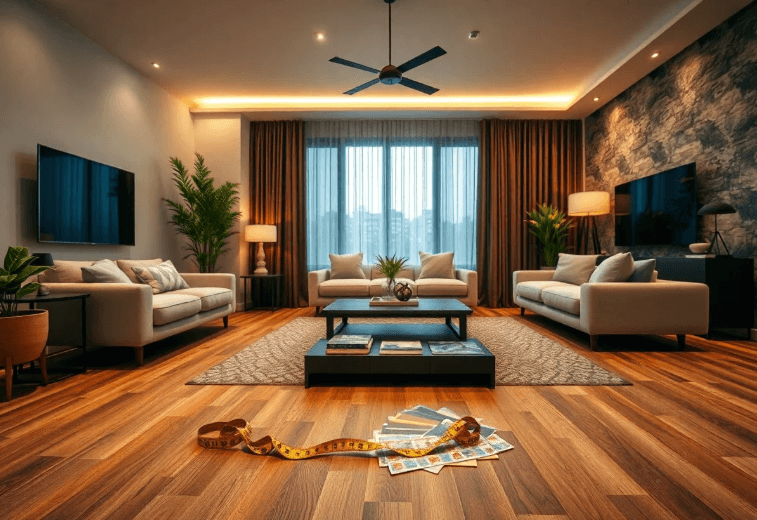
Choosing new floors can feel exciting at first. You picture the finished room, browse colors, compare materials, and imagine how everything will look once the work is done. Then reality kicks in. One floor looks warm but too dark. Another feels practical but a little plain. A third works in one room but clashes with the next. That is where a few simple design rules can make the process much easier.
Flooring affects the way your home flows, the way natural light moves through a space, and even how large or small a room feels. These rules are not meant to trap you into one style. They are meant to give you a framework so your choices feel more intentional. Homeowners who want extra guidance can also get help from https://www.premierhardwood.net/ when comparing options and planning a more cohesive result.
The rule of three keeps your home from feeling scattered
The rule of three is one of the simplest design principles, but it can make a big difference when choosing floors. The basic idea is that too many competing flooring styles can make a home feel chopped up. When every room has a different color, finish, texture, or material, the eye never gets a chance to settle.
In flooring, this rule usually means limiting yourself to around three main flooring choices throughout the home. That does not mean every room needs to look identical. It simply means there should be a clear sense of connection from one area to the next.
For example, you might use one main wood tone through living areas, a more moisture-resistant surface in utility spaces, and a softer option in private rooms. That gives each space what it needs while still keeping the overall design calm and connected.
The balance matters. Using only one flooring type everywhere can sometimes feel beautifully seamless, especially in open layouts. But in other homes, one material may not be practical for every room. A floor that works well in a living area may not be the best choice for a damp or high-spill space. The rule of three gives you room to be practical without letting the home feel visually busy.
A good way to apply this rule is to think about transitions. If two flooring materials meet at a doorway or hallway, ask whether they feel related. They do not have to match perfectly, but they should feel like they belong in the same home. Similar undertones, compatible finishes, or consistent plank direction can help make the shift feel intentional.
The 60/30/10 rule brings color balance into the room
The 60/30/10 rule is usually discussed in interior design, but it also applies to flooring. It is a color balance rule that helps a room feel layered without becoming overwhelming. In simple terms, 60 percent of the room carries the dominant color, 30 percent supports it with a secondary color, and 10 percent adds contrast or personality.
Flooring often plays a major role in that first 60 percent. A warm, natural floor can anchor the room and influence how the walls, furniture, rugs, and accents feel. A cooler-toned floor can make a room feel more modern or calm. A darker floor can create richness, while a lighter floor can make a space feel more open.
The mistake many homeowners make is choosing flooring in isolation. A sample may look beautiful on its own, but once it is placed beside cabinets, wall colors, furniture, trim, and natural light, it can feel very different. That does not mean the floor was a bad choice. It means the floor needed to be considered as part of the full color story.
This rule is especially helpful when you want contrast. Contrast can be stunning, but it needs control. If the floor is already bold, the walls and larger furniture pieces may need to stay calmer. If the floor is soft and neutral, the room can usually handle stronger accent colors through rugs, chairs, art, or décor.
Still, the 60/30/10 rule should not be treated as strict math. Homes are lived in, not staged forever. Personal taste, natural light, existing furniture, pets, children, and long-term upkeep all matter. A floor should support the way you actually live, not just follow a design formula. The goal is balance, not perfection.
The 3-4-5 rule is more about precision than decoration
The 3-4-5 rule is different from the other two because it is not really about color or style. It is a practical measuring principle used to create a square layout. In simple terms, it comes from a triangle with sides measuring three, four, and five units. When those measurements line up correctly, they form a right angle.
In flooring work, that matters because the starting line affects the finished look. If the first row is slightly off, that small mistake can become more noticeable as the floor continues across the room. Lines may drift, planks may look uneven near walls, and the finished layout may feel less polished.
This rule is especially useful because many homes are not perfectly square. Walls can shift over time, older rooms may have quirks, and corners may not be as straight as they look. A careful layout helps avoid drawing attention to those imperfections.
From a homeowner’s perspective, the takeaway is simple: beautiful flooring is not only about the product you choose. It is also about preparation. A great color or finish can still look disappointing if the layout feels crooked or the transitions are awkward. Precision gives the design a stronger foundation.
There is a fair balance here, too. Not every minor irregularity can be erased, especially in older homes. A skilled installer may need to make judgment calls based on the room, the material, and the most visible sightlines. The 3-4-5 rule helps create a reliable starting point, but experience still matters when adapting that rule to real-world spaces.
See also: Benefits of Using Ultrasonic Cleaners at Home
Rules help, but your home gets the final say
Design rules are useful because they simplify decisions. They help you avoid common mistakes, narrow down choices, and create a home that feels more cohesive. But they should guide your thinking, not control every choice.
A home with bold character may benefit from breaking the rule of three in a thoughtful way. A room with unusual lighting may need a different color balance than the 60/30/10 rule suggests. A layout with angled walls or older construction may require creative installation planning beyond a basic measuring principle.
The best flooring choices usually come from a mix of design sense and practical thinking. Consider how each room is used. Think about moisture, foot traffic, pets, furniture, cleaning habits, and how long you want the floor to last. A beautiful floor that is difficult to maintain may become frustrating. A practical floor that clashes with the rest of the home may feel like a compromise every time you walk through the room.
It also helps to view flooring as part of the whole home rather than a single-room decision. The most successful results often happen when the floor supports the architecture, the lighting, the furniture, and the way people move through the space.
A better way to choose with confidence
Flooring decisions can feel overwhelming, but these three rules make the process easier. The rule of three helps prevent a scattered look. The 60/30/10 rule brings color balance into the room. The 3-4-5 rule reminds homeowners that careful layout and precision matter just as much as style.
The smartest approach is not to follow every rule blindly. It is to understand what each rule is trying to prevent. Too many flooring styles can feel chaotic. Poor color balance can make a room feel disconnected. A rushed layout can make even high-quality materials look less refined.
When you use these rules as a starting point, choosing floors becomes less about guessing and more about creating a home that feels intentional, comfortable, and built to last.