Most people think a polygraph test is a lie detector. Simple as that. You tell the truth, you pass. You lie, you fail.
That’s the story we’ve all absorbed from crime shows and courtroom dramas.
But here’s the thing—polygraphs don’t actually detect lies.
They detect something else entirely. And once you understand that, the whole idea of a “lie detector test” starts to look a lot less certain and a lot more complicated.
What a Polygraph Actually Measures
A polygraph doesn’t read your mind. It reads your body.
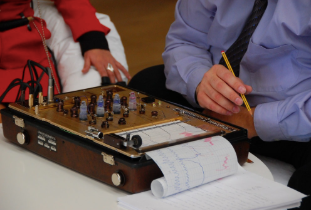
When you’re hooked up to one, several things get monitored at the same time: your heart rate, breathing pattern, blood pressure, and skin conductivity (how much you sweat). These are all tied to your autonomic nervous system—the part of your body that reacts automatically when you’re stressed, anxious, or emotionally triggered.
So the machine is really tracking physiological changes.
The assumption is simple: when people lie, they feel stress. That stress shows up in their body. The machine records it.
Sounds reasonable, right?
But stress isn’t exclusive to lying. That’s where things get messy.
Imagine you’re sitting in a quiet room, wires attached, being asked questions that could affect your job or your future. Even if you’re completely honest, your body might react. Your heart might race. Your palms might sweat.
Not because you’re lying—but because the situation itself is intense.
How the Test Is Usually Conducted
Polygraph tests aren’t just about the machine. The process matters just as much, maybe more.
Before the actual test begins, there’s typically a pre-test interview. This part can take longer than the test itself. The examiner talks to you, explains the process, and goes over the questions.
This is where things start to take shape.
You’re told to answer “yes” or “no” to specific questions. No explanations. No storytelling. Just clean, simple answers.
Then come three types of questions:
- Neutral questions (like “Is your name John?”)
- Control questions (broad ones designed to provoke mild stress, like “Have you ever lied to get out of trouble?”)
- Relevant questions (the ones that actually matter, like “Did you take the missing money?”)
Here’s the trick: your reactions to the control questions are compared to your reactions to the relevant ones.
If your body reacts more strongly to the relevant questions, that’s taken as a sign of deception.
If your reactions are similar—or stronger on the control questions—you’re more likely to be seen as truthful.
It’s not about detecting lies directly. It’s about comparing patterns.
Why People Still Believe in It
Despite all the controversy, polygraph tests are still used in certain situations—especially in law enforcement and government screening.
Part of the reason is psychological.
The test can be intimidating. Sitting there, hooked up to sensors, being watched closely—it puts pressure on people. And sometimes, that pressure leads to confessions.
There are real cases where someone fails a polygraph, gets confronted, and then admits to something they were hiding.
But here’s where it gets tricky.
Was it the machine that revealed the truth? Or the stress of the situation?
A seasoned investigator might say the polygraph is less about detecting lies and more about creating conditions where people reveal them.
The Problem With Accuracy
Let’s be honest. If a test can affect someone’s job, reputation, or legal outcome, it needs to be reliable.
Polygraphs aren’t consistently reliable.
Studies over the years have shown mixed results. Some suggest accuracy rates around 70–90% under certain conditions. Others highlight how easily results can be skewed.
That’s a wide range. Too wide for comfort.
False positives happen. That means truthful people can be flagged as deceptive.
Picture someone applying for a security job. They’ve done nothing wrong, but they’re nervous. The stakes are high. Their body reacts strongly to relevant questions. The test suggests deception.
Now they’re in a difficult position—trying to prove honesty after being labeled otherwise.
False negatives also exist. A person who is lying might stay calm enough—or use certain techniques—to avoid triggering strong physiological responses.
So you end up with a system that can misread both truth and lies.
See also: Party Decorations Delivery: The Designer’s Secret to Last-Minute Celebrations
Can People Beat a Polygraph?
This question comes up a lot, and the honest answer is: sometimes, yes.
Not because people are master manipulators, but because the test relies on relative responses.
If someone artificially increases their stress during control questions—by doing something subtle like biting their tongue, tensing muscles, or altering breathing—it can shift the baseline.
Now the relevant questions don’t stand out as much.
On the flip side, someone who practices staying calm—through breathing techniques or mental focus—might reduce their physiological reactions overall.
This doesn’t guarantee passing. It’s not foolproof.
But it highlights a key weakness: the test can be influenced.
And when a system can be influenced, its reliability becomes questionable.
Where Polygraphs Are Used Today
Even with all the criticism, polygraphs haven’t disappeared.
They’re still used in certain hiring processes, especially for sensitive roles in law enforcement or intelligence agencies. They also show up in some criminal investigations, not usually as courtroom evidence, but as an investigative tool.
That last part matters.
In many places, polygraph results aren’t admissible in court. Judges tend to be cautious about allowing them because of the uncertainty around accuracy.
But outside the courtroom, they still carry weight.
An employer might consider the results when making a decision. An investigator might use them to guide further questioning.
So while the test isn’t legally definitive, it can still have real-world consequences.
The Human Factor
Here’s something people don’t talk about enough: the examiner plays a big role.
Polygraph testing isn’t just reading a machine output. It involves interpretation. The examiner decides which questions to emphasize, how to frame them, and how to read the results.
Two different examiners might interpret the same data slightly differently.
And then there’s the interaction itself.
The way questions are asked, the tone of voice, even body language—these can influence how a person responds. A tense or confrontational approach might increase stress levels. A calmer approach might reduce them.
So the outcome isn’t purely mechanical. It’s part human, part machine.
That combination introduces variability.
A Small Real-Life Scenario
Imagine this.
You’re asked to take a polygraph as part of a job screening. You’ve never committed any serious wrongdoing. But there’s one question that sticks with you:
“Have you ever lied to someone in a position of authority?”
You think back. Maybe you once told a teacher you forgot your homework when you actually didn’t do it. Harmless, right?
But now you’re wondering—does that count?
During the test, that question comes up again in a slightly different form. Your mind starts racing. Your body reacts.
Meanwhile, the more serious question—about something you didn’t do—feels straightforward. You answer calmly.
The result? Your physiological response to the control question is strong, but your response to the relevant question is mild.
That might work in your favor.
Or flip the scenario.
You’re especially anxious about the main accusation, even though you’re innocent. Your body reacts more strongly there.
Now the test suggests deception.
Same person. Same truth. Different outcome.
Why the Debate Isn’t Going Away
Polygraphs sit in a strange space between science and psychology.
They’re based on real physiological measurements. That part is solid.
But the interpretation—linking those measurements directly to truth or deception—is where things get shaky.
Supporters argue that, when used properly, polygraphs can be a useful tool. Not perfect, but helpful.
Critics argue that the margin of error is too high, especially when the stakes are serious.
And both sides have a point.
The test can provide insight into how someone is reacting. It can highlight areas worth exploring further.
But treating it as a definitive lie detector? That’s where problems start.
The Bottom Line
A polygraph test doesn’t detect lies. It detects responses—stress, anxiety, emotional shifts.
Sometimes those responses line up with deception. Sometimes they don’t.
That gap is what makes the test both intriguing and controversial.
If you ever find yourself facing one, it helps to understand what’s really happening. It’s not about a machine uncovering hidden truths. It’s about how your body reacts under pressure—and how someone else interprets those reactions.
And that’s a much less certain process than most people think.