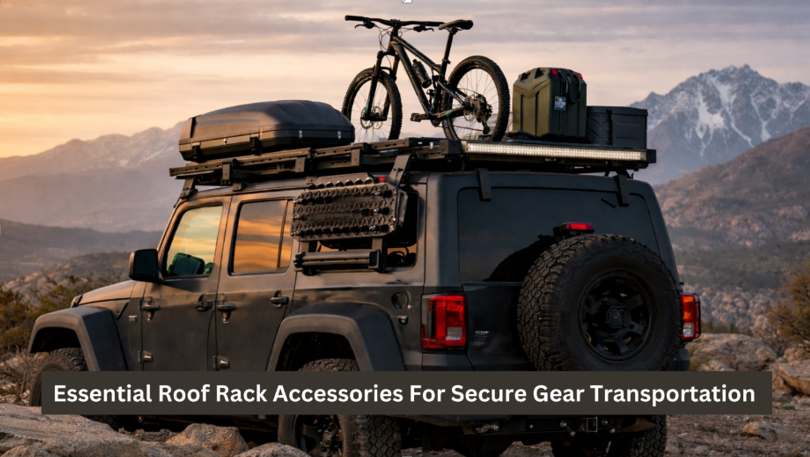
Loading your gear onto a roof rack usually seems easy–until something shifts mid-drive. Straps loosen, cargo rattles, and suddenly you’re second-guessing every mile. Whether you’re off-road driving, driving across state lines, or commuting with oversized equipment, unstable equipment causes stress and safety problems. In addition, loosely tied loads can cause damage to your vehicle and your equipment.
That’s why it’s as important to select the appropriate rack accessories to match the rack itself. When properly equipped, your setup is made modular, secure, and ready for the real-world terrain.
This article breaks down the core components that ensure your cargo remains safe, stable, and organized throughout transport.
1. Brackets and Modular Attachment Systems
When creating a safe transportation layout, the elements of roof rack accessories start with the foundation: the mounting brackets and the modular attachment systems. Without a good base, even the best quality gear carriers are unable to function properly.
Modular brackets enable you to attach different parts of equipment – bikes, water tanks, jerry cans, storage boxes, and lighting systems without having to drill into your rack. As a result, you are able to maintain structural integrity as well as gain flexibility.
In addition, high-strength brackets distribute the weight evenly across the rack platform. This reduces the concentration of stress as well as warping under load. More importantly, because of a modular rail system, you can shift attachments depending on your trip. For example, you might want to prioritize fuel storage capabilities for overland travel, but use kayak mounts for a weekend adventure.
Therefore, an investment in adjustable mounting systems guarantees adaptability as well as long-term durability.
2. Cargo Boxes and Storage Containers
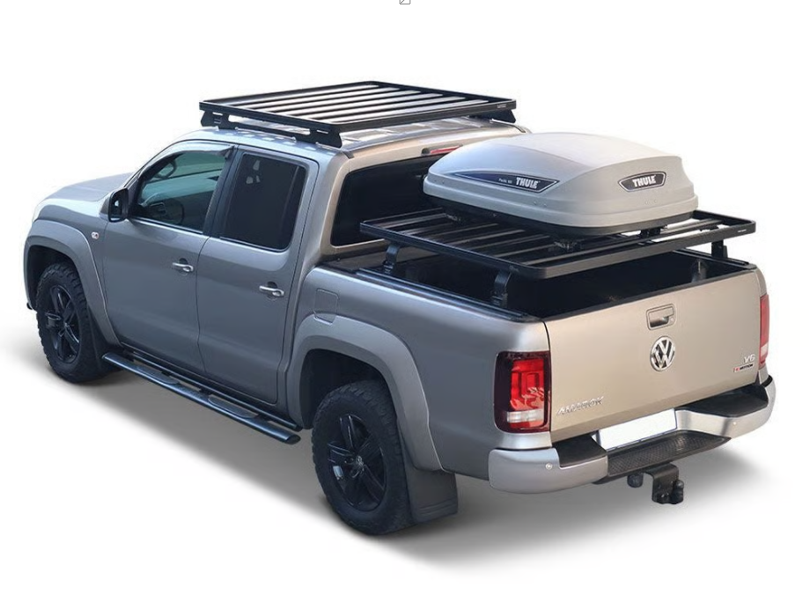
Loose contents on a roof rack are prone to the weather, vibrations, and theft. That is why enclosed storage solutions are necessary.
Weather-resistant type cargo box and storage container preserves your gear from rain, dust, and ultraviolet exposure. This is especially important when carrying electronics, camping equipment, or recovery equipment. Furthermore, lockable systems provide a layer of security when your vehicle is unattended.
Another benefit is organization. Instead of tying down multiple small bags, all of the items remain consolidated into a single structured container. This helps to balance loads and also to decrease wind resistance.
In addition, aerodynamic storage boxes help ensure fuel efficiency by reducing drag. Over long distances, this difference is noticeable. In short, enclosed storage is safer and more convenient.
3. Tie Down Straps, Lashing Rings, and Load Bars
Even when containers and brackets are used, extensive tie-down systems are critical. After all, movement during transit is the main cause of cargo instability.
Heavy-duty tie-down straps with reinforced buckles secure gear tightly against the rack. As opposed to basic cords, high-tension straps are resistant to stretching under vibration. As a result, your load stays constant throughout the journey.
Lashing rings and anchor points adamantly provide the extra stability. These components feature set attachment zones so that you can attach things from various angles. The lateral shifting from making sharp turns or over uneven terrain is prevented due to the multi-point stabilization.
Further, additional load bars are used to create separation between items. By segmenting cargo zones, you reduce the friction and prevent the collision of equipment.
In addition, an effective tie-down solution turns your rack into a platform for controlled cargo instead of a flat surface with loose cargo.
See also: First-Time Traveler’s Guide to Flight Tickets from Boston to India
4. Specialized Carriers for Sports and Outdoor Equipment
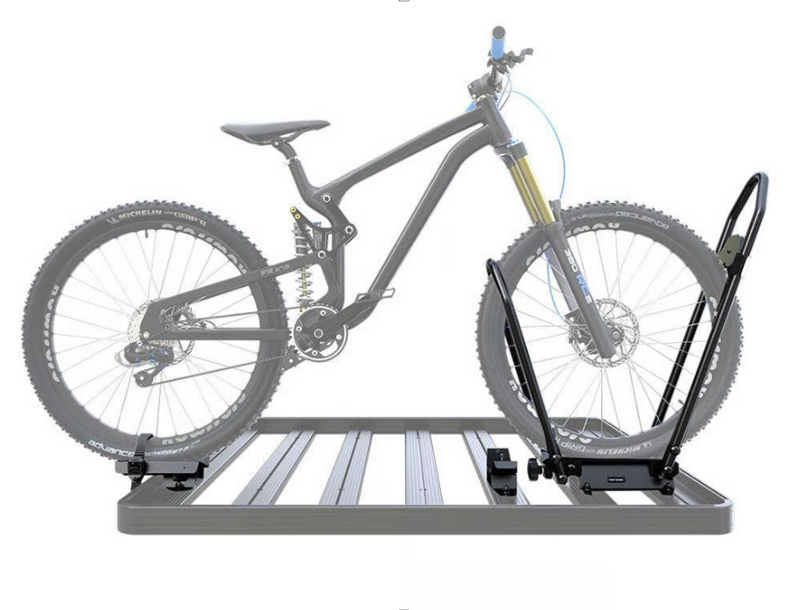
Specialized gear needs specialized transport. For example, kayaks, bikes, skis, and recovery boards all require different types of mounting.
Dedicated carriers cradle equipment securely without compressing or damaging the equipment. Kayak mounts, for example, have contoured supports, which prevent hull distortion from occurring. Similarly, bike mounts stabilize the bike’s frame while protecting tires and suspension components.
In addition, specialized holders can optimally enhance loading efficiency. Instead of wrestling equipment into place, you guide it into pre-structured supports. This shortens setup time and eliminates the risk of dropping heavy equipment.
In addition, purpose-built carriers promote safety compliance. Improvised tie-down procedures often cause failure at highway speeds or sudden braking. On the other hand, engineered carriers are designed to withstand wind resistance and road vibrations.
Ultimately, having the right accessory to match your equipment will result in reliable performance as well as longevity of your gear.
5. Utility Mounts for Fuel, Water, and Recovery Equipment
Extended travel introduces another challenge: transporting essential utilities. Fuel cans, water tanks, and recovery tools must remain accessible yet firmly secured.
Utility mounts are engineered to hold heavy, dense loads without shifting. Because these items significantly impact weight distribution, stable mounting prevents imbalance.
Additionally, vertical and side-mounted holders maximize rack space. Instead of occupying central cargo areas, utilities can be positioned along rack edges. This strategic placement leaves room for larger items such as tents or storage boxes.
Moreover, secure mounts reduce rattling noise. Metal containers and recovery boards can create constant vibration if loosely fastened. Precision-fit brackets eliminate that distraction.
Therefore, integrating utility mounts not only improves safety but also enhances spatial efficiency during expedition-style travel.
Conclusion
Each accessory serves a specific role; however, its real value emerges when combined strategically. Mounting brackets provide the foundation. Storage containers protect contents. Tie-down systems prevent movement. Specialized carriers safeguard equipment. Utility mounts stabilize heavy essentials. Finally, lighting and integration systems enhance functionality.
When selected carefully, these components work together to create a balanced and secure load configuration. In turn, this reduces risk, protects your investment, and ensures smoother travel across varying terrain.